The local AI operations system for documents, data and knowledge
ReVan is designed for teams that work with sensitive documents, internal knowledge and recurring analysis tasks. PDFs, scanned files, reports, spreadsheets and structured data can be processed in one workflow instead of being scattered across disconnected tools. Rather than relying on a single prompt, ReVan supports structured modes, reusable sessions and controlled execution for work that needs context and consistency. Results are designed to be understandable and useful in practice — not just plausible on first read.
Why teams choose ReVan
Standard AI tools are often useful for quick answers, but they are not always a good fit for sensitive business workflows. Teams need to know where data is processed, how results were produced and whether outputs can be trusted in recurring operational use. ReVan is built for exactly that: local control instead of default cloud dependency, persistent context instead of fleeting chat history, and workflow-driven analysis instead of isolated one-off answers.

Typical use cases
ReVan is well suited for document-heavy and data-intensive work, including internal knowledge workflows, document and OCR analysis, reporting from spreadsheets and files, research workflows with reusable context, and operational tasks that benefit from controlled AI assistance. It is especially relevant for teams in compliance, audit, legal, controlling, research and other environments where sensitive information and repeatable results matter.
What makes ReVan different
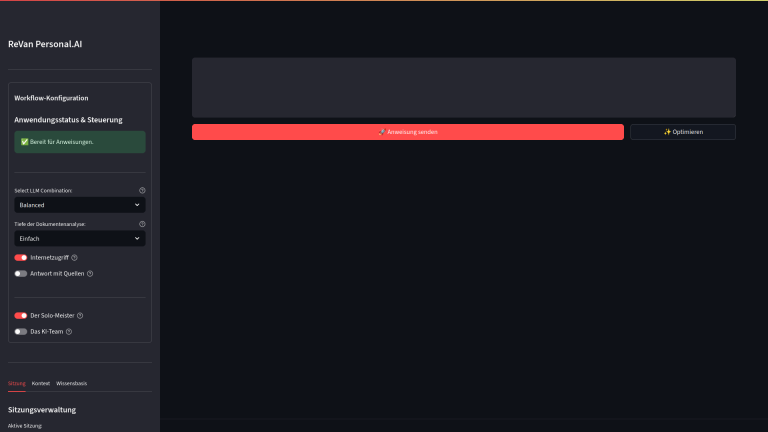
ReVan is not just another chat interface. It is a controllable AI working environment. Multi-step workflows, persistent sessions, document and data handling, visible system status and guardrails are part of the product direction. The goal is practical AI that can be used productively in real organizations without giving up control over data, context and operating boundaries.
ReVan is built for local and controlled environments. Depending on the use case, deployment can be aligned with the customer’s infrastructure and operational requirements. The focus is always the same: keep sensitive work under control, reduce unnecessary data exposure and provide a setup that fits enterprise reality rather than forcing everything into a generic cloud model.